
Calendar of Classes
[FALL2025] Beginner I Yiddish (Sunday Morning)
This weekly class covers the alef-beys and grammar, vocabulary, and conversational basics. It is for those who are new to the Yiddish language or would like a review.
[FALL2025] Beginner I Yiddish (Early Sunday Afternoon)
This weekly class covers the alef-beys and grammar, vocabulary, and conversational basics. It is for those who are new to the Yiddish language or would like a review.
[FALL2025] Advanced I Yiddish (Monday)
This weekly class enhances listening, speaking, writing, and reading skills. It is primarily for students who have completed Intermediate IV Yiddish or equivalent coursework.
[FALL2025] Beginner II Yiddish (In-person)
This weekly class develops listening, speaking, writing, and reading skills. It is primarily for students who have completed Beginner I Yiddish or equivalent coursework.
[FALL2025] Beginner II Yiddish (Monday)
This weekly class develops listening, speaking, writing, and reading skills. It is primarily for students who have completed Beginner I Yiddish or equivalent coursework.
[FALL2025] Intermediate IV Yiddish (Tuesday)
This weekly class enhances listening, speaking, writing, and reading skills. It is primarily for students who have completed Intermediate III Yiddish or equivalent coursework.
[FALL2025] Advanced Topics in Yiddish Literature & Grammar: Autobiographical Writing in Yiddish
This twice-weekly class enhances listening, speaking, writing, and reading skills. It is primarily for students who have completed Advanced II Yiddish or equivalent coursework.
[FALL2025] Beginner III Yiddish (In-person)
This weekly class develops listening, speaking, writing, and reading skills. It is primarily for students who have completed Beginner II Yiddish or equivalent coursework.
[FALL2025] Beginner III Yiddish (Thursday)
This weekly class develops listening, speaking, writing, and reading skills. It is primarily for students who have completed Beginner II Yiddish or equivalent coursework.
[FALL2025] Advanced I Yiddish (Thursday)
This weekly class enhances listening, speaking, writing, and reading skills. It is primarily for students who have completed Intermediate IV Yiddish or equivalent coursework.
[WY2026] Hitting the Road with Ester-Rokhl
Follow Esther-Rokhl Kaminska from her native shtetl, to the barns in which her wandering troupe first performs, and eventually to the brightly lit stages of Warsaw in this class taught by Mikhl Yashinsky.
[WY2026] Alefbeys Workshop
Josh Price prepares students to start learning Yiddish with an introduction to the Yiddish alphabet, basic reading, writing, and pronunciation.
[WY2026] An Introduction to Chaim Grade
Josh Price examines the life and work of Chaim Grade, one of the most profound voices in modern Yiddish literature.
[WY2026] Tradition and Innovation in Modern Yiddish Poetry: The Case of Dovid Hofshteyn (1889-1952)
Eugene Orenstein analyzes selected texts from Soviet Yiddish poet Dovid Hofshteyn in order to appreciate the genius of his poetics and the synthesis of his Jewishness and universalism.
[WP2026] An Open Ghetto Next Door to Treblinka
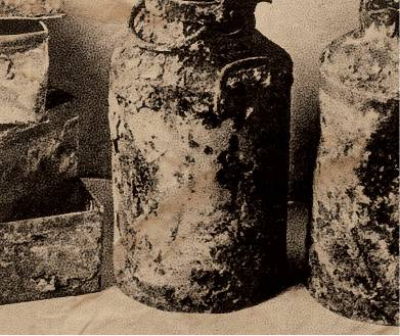
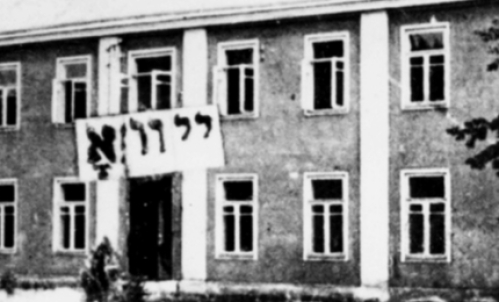
Elżbieta Janicka explores how Kosów Lacki’s physical and symbolic landscapes reveal the complex realities of Jewish life, survival, and persecution during the Holocaust.
[WP2026] The Wandering Jew in Yiddish Literature
Through literary texts, Anita Norich explores how Yiddish writers have imagined where they and the Jewish people belong.
[WP2026] The Jews of Mexico
Ilan Stavans uncovers the intertwined stories of Sephardim, Ottomans, Ashkenazim, Communists, Shoah survivors, Hasidim, and Israelis whose experiences have defined Jewish identity in Mexico.
[WP2026] American Jews, Communism, and Espionage
From the Rosenberg trial to McCarthyism, Harvey Klehr reveals how fear, politics, and Jewish identity intertwined in the drama of Cold War America.
[WP2026] The Shtetl
Through the words of Yiddish writers and firsthand memoirs, this course with Samuel Kassow reveals the “real” shtetl, a complex community that had an enormous impact on Jewish life over the centuries.
[WP2026] Jews and Revolution
Tony Michels explores the ways in which Jews in different countries, but especially the United States, responded to the Russian Revolution.
[WP2026] Photography and Jewishness
Maya Benton explores the unique contributions of Jews to shaping the history and medium of photography.
[WP2026] Two Revolutionaries
Jonathan Brent explores the lives and memoirs of revolutionaries Victor Serge and Isaac Nachman Steinberg.
[WP2026] Émigré Jews and Film Noir
J. Hoberman traces how German and Austrian Jewish directors redefined American cinema in the 1940s.
[WY2026] Creative Writing in Yiddish
Bring your Yiddish to life through storytelling, style, and imagination in a creative writing course led by Boris Sandler.
[WY2026] The Radical Peretz
Adi Mahalel explores classic Yiddish writer I. L. Peretz’s engagement with early Jewish socialist circles during the 1890s.
2026 Summer Program Information Session
Have you always wanted to study Yiddish at the YIVO-Bard Summer Program? Are you wondering what it would be like to spend six weeks studying at YIVO in New York City? Join faculty and staff of the Summer Program for a brief information session.
[WY2026] YIVO Luminaries in their Own Words
Join Dovid Braun for an immersive journey into the voices of YIVO’s founding scholars and discover how their words still shape Yiddish thought today.
[WY2026] The Art of the Yiddish Monologue
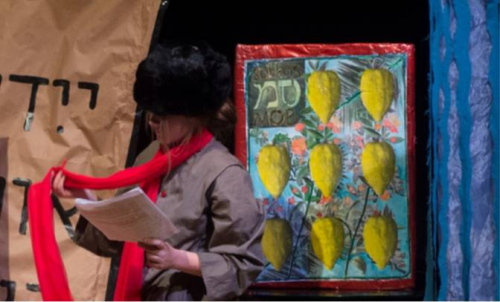
Shane Baker explores the nature of the monologue in Yiddish literature and performance and delves into the history of the monologue and of the solo performer in Yiddish theater.
[WY2026] Yiddish Songs and Chants for Children
Conducted in English, Perl Teitelbaum teaches Yiddish songs and chants to adults. Parents, grandparents, relatives, friends, and educators who want to bring Yiddish into the world of young children (or to enrich their own inner child!) are encouraged to register.
2026 Summer Program Information Session
Have you always wanted to study Yiddish at the YIVO-Bard Summer Program? Are you wondering what it would be like to spend six weeks studying at YIVO in New York City? Join faculty and staff of the Summer Program for a brief information session.
2026 Summer Program Information Session
Have you always wanted to study Yiddish at the YIVO-Bard Summer Program? Are you wondering what it would be like to spend six weeks studying at YIVO in New York City? Join faculty and staff of the Summer Program for a brief information session.
2026 Summer Program Information Session - Advanced Levels
Are you thinking of returning to the Summer Program to continue your advanced studies? Join Summer Program faculty and staff for a brief information session about YIVO’s advanced levels.
[SPR2026] Beginner I Yiddish (Tuesday)
This weekly class covers the alef-beys and grammar, vocabulary, and conversational basics. It is for those who are new to the Yiddish language or would like a review.
[SPR2026] Advanced I Yiddish (Tuesday)
This weekly standard class enhances listening, speaking, writing, and reading skills. It is primarily for students who have completed Intermediate IV Yiddish or equivalent coursework.
[SPR2026] Beginner IV Yiddish (In-person)
This weekly class develops listening, speaking, writing, and reading skills. It is primarily for students who have completed Beginner III Yiddish or equivalent coursework.
[SPR2026] Intermediate II Yiddish
This weekly class enhances listening, speaking, writing, and reading skills. It is primarily for students who have completed Intermediate I Yiddish or equivalent coursework.
[SPR2026] Advanced Topics in Yiddish Literature & Grammar: Autobiographical Writing in Yiddish
This twice-weekly class enhances listening, speaking, writing, and reading skills. It is primarily for students who have completed Advanced II Yiddish or equivalent coursework.
[SPR2026] Beginner I Yiddish (Wednesday)
This weekly class covers the alef-beys and grammar, vocabulary, and conversational basics. It is for those who are new to the Yiddish language or would like a review.
[SPR2026] Beginner I Yiddish (In-person)
This weekly class covers the alef-beys and grammar, vocabulary, and conversational basics. It is for those who are new to the Yiddish language or would like a review.
[SPR2026] Beginner III Yiddish (Thursday)
This weekly class enhances listening, speaking, writing, and reading skills. It is primarily for students who have completed Beginner II Yiddish or equivalent coursework.
[SPR2026] Advanced II Yiddish (Thursday)
This weekly class enhances listening, speaking, writing, and reading skills. It is primarily for students who have completed Advanced I Yiddish or equivalent coursework.
[SPR2026] Intermediate IV Yiddish
This weekly class enhances listening, speaking, writing, and reading skills. It is primarily for students who have completed Intermediate III Yiddish or equivalent coursework.
[SPR2026] Intermediate I Yiddish
This weekly class develops listening, speaking, writing, and reading skills. It is primarily for students who have completed Beginner IV Yiddish or equivalent coursework.
[SPR2026] Advanced Topics in Yiddish Literature & Grammar: Writers Writing about Writers
This weekly class enhances listening, speaking, writing, and reading skills. It is appropriate for Yiddish students at the advanced level.
[SPR2026] Beginner I Yiddish (Sunday)
This weekly class covers the alef-beys and grammar, vocabulary, and conversational basics. It is for those who are new to the Yiddish language or would like a review.
[SPR2026] Advanced IV Yiddish (Sunday Afternoon)
This weekly class enhances listening, speaking, writing, and reading skills. It is primarily for students who have completed Advanced III Yiddish or equivalent coursework.
[SPR2026] Beginner III Yiddish (Sunday)
This weekly class develops listening, speaking, writing, and reading skills. It is primarily for students who have completed Beginner II Yiddish or equivalent coursework.
[SPR2026] Beginner II Yiddish (Sunday Afternoon)
This weekly class develops listening, speaking, writing, and reading skills. It is primarily for students who have completed Beginner I Yiddish or equivalent coursework.
[SPR2026] Advanced IV Yiddish (Sunday Evening)
This weekly class enhances listening, speaking, writing, and reading skills. It is primarily for students who have completed Advanced III Yiddish or equivalent coursework.
[SPR2026] Advanced II Yiddish (Monday)
This weekly class enhances listening, speaking, writing, and reading skills. It is primarily for students who have completed Advanced I Yiddish or equivalent coursework.
[SPR2026] Advanced I Yiddish (Monday)
This weekly class enhances listening, speaking, writing, and reading skills. It is primarily for students who have completed Intermediate IV Yiddish or equivalent coursework.
[SPR2026] Beginner III Yiddish (In-person)
This weekly class develops listening, speaking, writing, and reading skills. It is primarily for students who have completed Beginner II Yiddish or equivalent coursework.
[SPR2026] Intermediate III Yiddish
This weekly class develops listening, speaking, writing, and reading skills. It is primarily for students who have completed Intermediate II Yiddish or equivalent coursework.
[SPR2026] Beginner II Yiddish (Sunday Morning)
This weekly class develops listening, speaking, writing, and reading skills. It is primarily for students who have completed Beginner I Yiddish or equivalent coursework.
[SPR2026] The World of Eastern European Jewish Migrants
Aleksandra Jakubczak explores the phenomenon of Eastern European Jewish migration, which profoundly affected both the Jews who went abroad and those who stayed behind.
[SPR2026] The Art of the Yiddish Feuilleton
Sharon Bar-Kochva considers the felyeton (feuilleton) as a distinctively vibrant expression of Yiddish literary and journalistic creativity.
[SPR2026] The Life and Thought of Hillel Zeitlin
Samuel Glauber offers an introduction to Hillel Zeitlin (1871–1942), a prolific yet often underappreciated Warsaw intellectual whose works span the worlds of religious tradition and secular Jewish modernity.
[SPR2026] Beginner IV Yiddish (Monday)
This weekly class develops listening, speaking, writing, and reading skills. It is primarily for students who have completed Beginner III Yiddish or equivalent coursework.